Why Read Aloud? (The Case for Making It a Daily Habit)
Reading with my children is the only lesson where I reliably forget I’m the teacher. There’s nothing to assess, keep track of or think about. The objective proves itself in real time. I’m just there, on the sofa or at the kitchen table, being their parent, and we’re reading. On those days when the homeschool day has felt more like a shift at work than an adventure with my kids, a reading session is the thing that resets it.
I also plan days that are nothing but reading. Not often, but deliberately — usually when we’re approaching a study week, or when the collective mood of the house suggests that what everyone needs is a reset rather than another lesson. A full day of books in pyjamas feels like a hug from the homeschool universe. It’s also, as it turns out, a perfectly reasonable school day. Nobody learns less on those days.
What reading aloud actually does
Beyond the fact that it’s good for everyone’s spirits and does wonders to readdress the parent-teacher/pupil-child balance of home-ed role swaps, the research behind the benefits of reading aloud is substantial.
Reading aloud helps grow their vocabulary — both through hearing words read fluently and through the natural conversations that happen around unfamiliar language: if you want your children to develop a love of language learning, reading aloud is a good place to start.
When reading independently, children have to focus on the act of reading as well as comprehending the text; being read to allows them to focus only on the comprehension of the words. (In a similar way to how typing can help struggling writers and why audiobooks are also an effective home learning tool.)
There’s also a memory connection that’s well-supported by studies: words and passages encountered through reading aloud are retained more reliably than those read silently. If you want something to stick, reading it aloud — or having it read to you — turns out to help.
The more you implement reading aloud time, the greater their concentration span will become. Start with 15 minutes and gradually increase it. Active listening is a skill in itself, one that pays off across subjects and later in life. Read-aloud time is practice in that skill without it ever feeling like practice.
On choosing what to read
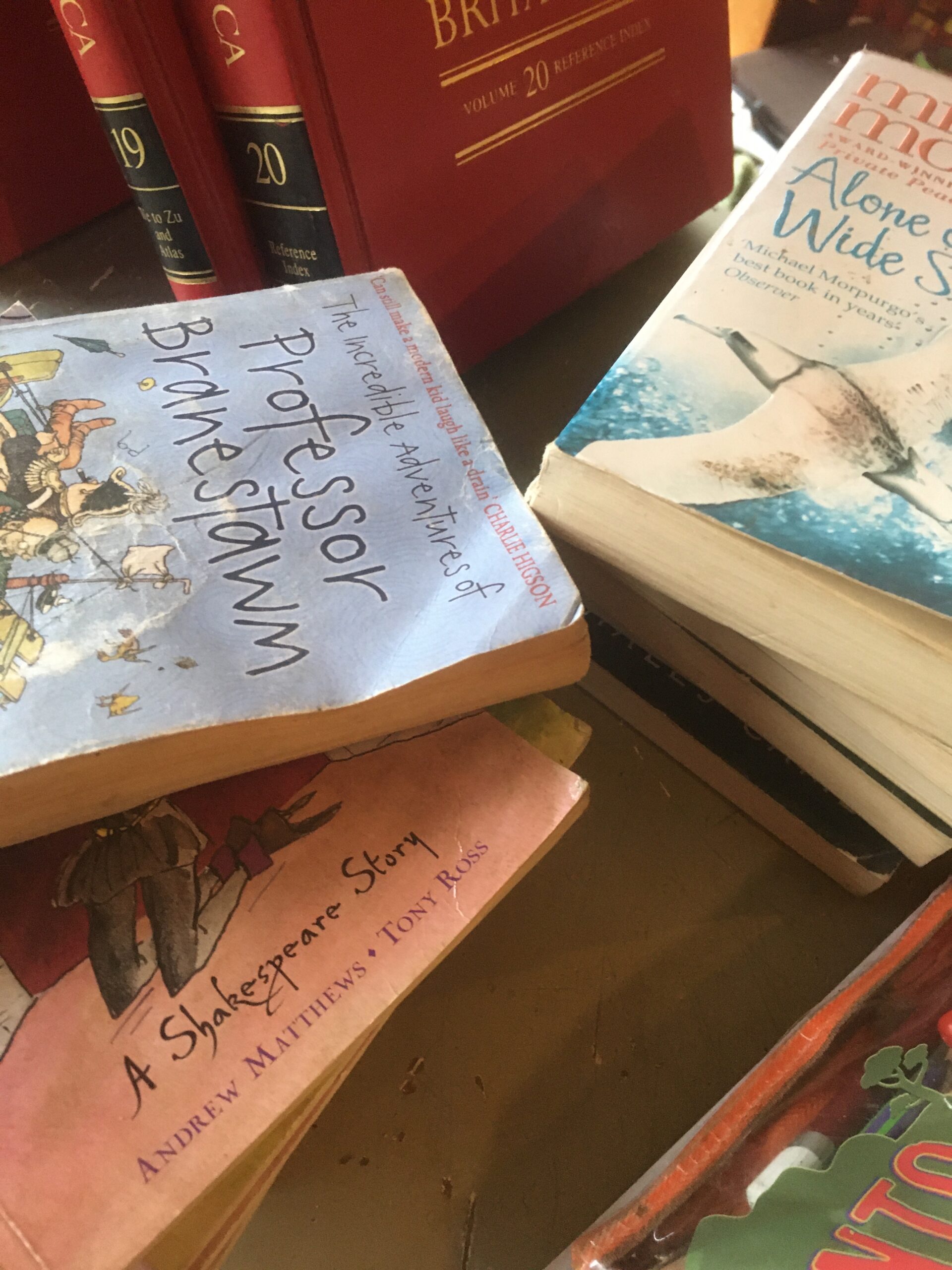
The books that work best for read-aloud aren’t always the obvious ones. Novels that connect to whatever topic you’re studying add an immersive layer to lessons that worksheets can’t — a book set during the Roman occupation makes the Romans real in a way that a timeline doesn’t. Publishers’ websites often have reading lists organised by topic if you need a starting point; bookshops and libraries are great for this too. For older home learners, some publishers provide teaching guides alongside their books that function as ready-made lesson plans – Harper Academic is a great example, this list by Penguin has suggestions for novels that could be incorporated into a study of The Romans, Egyptians or Tudors; this great list of 100 books to read could become a read-aloud curriculum plan throughout secondary school.
But also: read books that are funny. Read books that are sad. Read books that are above their reading level and books they could read themselves. Read things you love, because that comes through. A book read with genuine enthusiasm by the adult doing the reading is a more effective teaching tool than a technically appropriate text delivered without it.