How We Taught Our Children to Read (And What We’d Do the Same Again)
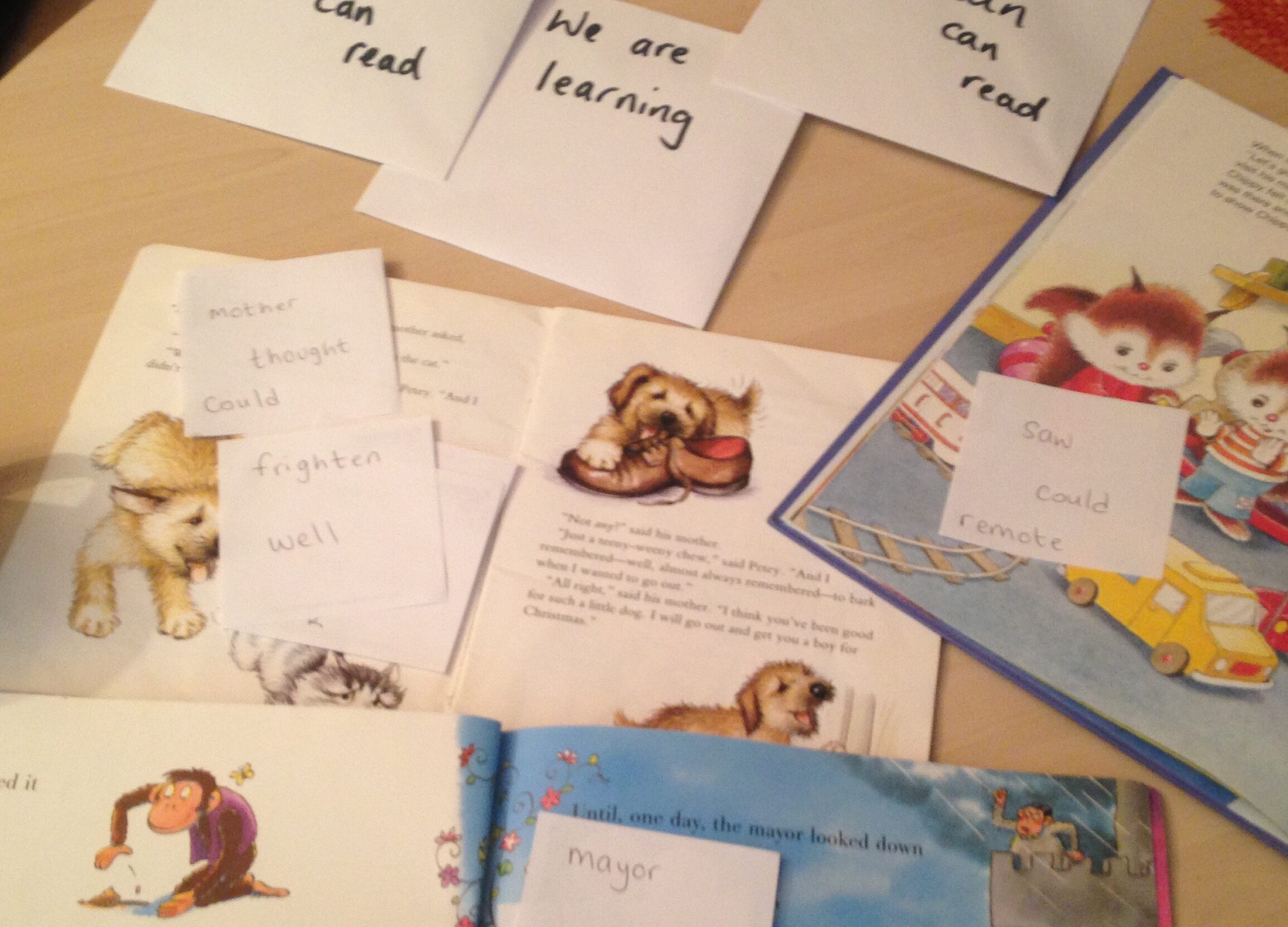
We didn’t start formal reading lessons until our children were seven. Before that, we read together constantly — daily, out loud, whatever we happened to be interested in — and they’d ‘read’ back to me books they knew by heart. Over time, they started recognising individual words, and we turned that into a simple game: two envelopes, one labelled ‘Words I Can Read’ and one labelled ‘Words I’m Learning’. Every time a new word was reliably recognised, it moved envelopes. Watching the first envelope fill up was, it turned out, extremely motivating for a small child. By the time we started structured lessons, they were already confident word recognisers. Which is a good place to start from.
The structured approach we used was Teach Your Child to Read in 100 Easy Lessons. I chose it for practical reasons: it slots into the day without much setup, requires minimal prep once you’ve read the teacher’s section, and the lesson structure is short enough that it doesn’t eat the whole morning. It works on phonemic awareness — rhyming, blending, segmenting — which differs from the phonics approach used by most UK schools, so it’s worth knowing that going in. It worked well for our children. Whether phonics or phonemic awareness is the ‘right’ approach is a debate that has been running in educational research for decades; for home educators, the practical question is simpler: does this method work for this child?
Dr Phyllis Haddock, who co-authored the book, has a free video series online that walks through the teaching approach in detail. It’s worth watching before you start — it functions as a short teacher training course for the method, and it’s more useful than reading the introduction alone. The accompanying downloadable materials (sounds practice cards, alphabet strips, vocabulary lists) extend the lessons without requiring anything extra from you.
A note on the surrounding environment: the method matters less than what’s around it. A child surrounded by accessible books, who sees adults reading for pleasure, who has never experienced reading as a test or a source of shame, is in the best conditions to learn regardless of which teaching approach you use. The textbook is a tool. The atmosphere is the key.
If your child is resistant or struggling
Don’t let it become a standoff. Keep reading to them — the exposure continues regardless of whether they’re reading back. Keep books accessible and let them choose. Keep the practice low-stakes and short: five minutes is better than a twenty-minute battle. Academic research consistently shows no meaningful difference in adult reading ability between children who learn to read early and those who learn later. There is no emergency. Keep it calm and they will get there.
If your child has a specific learning need that makes reading difficult, the approach shifts rather than stops: audiobooks, guided reading apps like Reading Eggs, and for older learners, AI reading support tools, all provide access to the content of texts without requiring the same decoding pathway. What matters is that they can access meaning through words — how they get there is secondary.