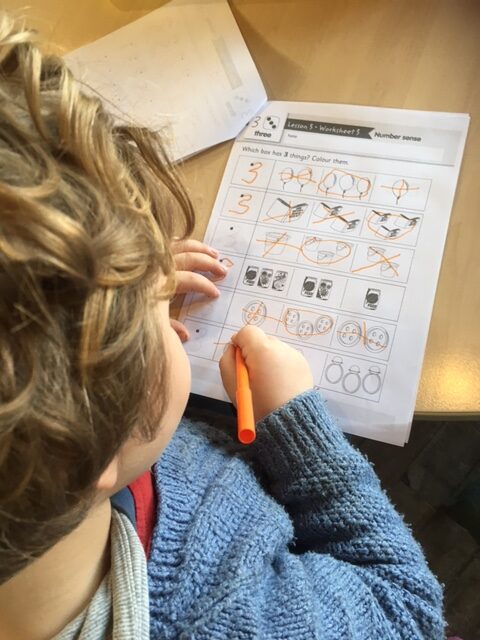
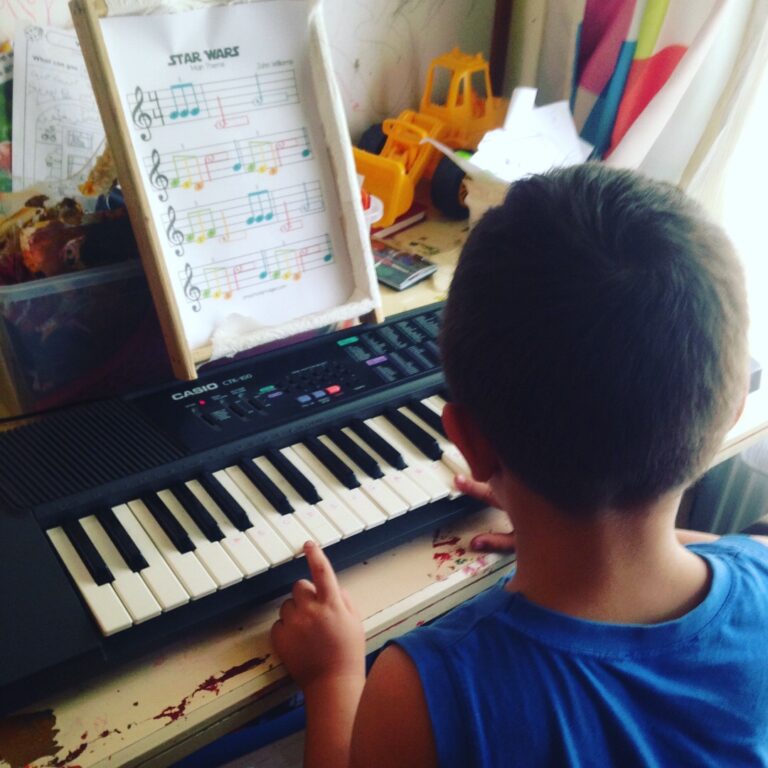
How to teach a home-ed lesson
When we started home-educating, my evenings were taken up entirely by lesson planning. I had a planned-for-the-year timetable, wrote detailed notes for each lesson and I’d make worksheets (this was in Twinkl’s infancy and downloadable resources for UK home educators were scarce). I even wrote timings in the margin of the plans. And then my kids would look at what I’d put in front of them, say “can we do something else,” or, even worse, “that’s easy, Mum”, and that would be that.
What I learned, slowly and mostly through trial and error, is that there is a difference between planning a lesson and teaching one – especially when teaching your children. A lesson plan is a map for you. What you do with it in the room is something else entirely, and if you’re hoping to follow it to the T, you’re setting yourself up for disappointment.
Starting the lesson well
The most useful thing you can do at the start of a lesson is connect what you’re about to teach to something the learner already knows. Not in a formal way with a quiz, but in a “do you remember when we…” or “you already understand X, and this is just the next bit” kind of way. It grounds them. It also quietly tells them: you can do this.
From there, it helps to give them a reason to care. Not a lecture on the importance of algebra, but something real. What problem does this skill solve? What would happen if no one knew how to do it? Absurd examples work surprisingly well with younger learners. Anything that makes the subject feel like it belongs in the world rather than only on the page. Outlining the purpose of learning whatever it is helps engage the learners.
Skill-based lessons and topic-based lessons work differently
With skill-based lessons, the shape is fairly simple: introduce the concept, work through an example together, give them one to try themselves, and then do one more. Three examples, in that order, is usually enough to move something from “I’ve seen this” to “I think I’ve got it.” The repetition isn’t padding; it’s how memory actually works. We revisit things because the brain needs the path worn in.
Topic-based lessons are trickier, because they can go anywhere. Questions are good, and you want them, but a lesson that follows every thread will usually end somewhere you didn’t intend. One thing that genuinely helps is writing down the points you need to cover before you start. Not a script, just a list. Then when an interesting question arrives, you can do the thing that works so well with curious kids: “that’s a brilliant question, let’s write it down and come back to it.” And mean it. Those questions make the best follow-up lessons.
(There’s more detail on identifying lesson objectives and frameworks for different lesson types here.)
Keeping the lesson from running away from you
If you’re using physical materials, hand them out one at a time. This sounds almost too small to mention, but handing learners a pile of papers at the start of a lesson is setting a competition between their focus on lesson and the papers. The papers usually win.
If the lesson involves note-taking, give them something specific to look for rather than just “write things down.” A question they’re trying to answer, or a gap to fill. It gives the note-taking a purpose and a structure which makes it more likely to happen, and it also means you have a ready-made summary activity at the end. There are many different note-taking techniques and finding out which one makes more sense to your learner is helpful.
(I’ll be writing a detailed post about teaching note-taking. If that sounds like it will be useful, sign up for the newsletter below.)
Ending the lesson
This part gets skipped more often than it should. A lesson with no ending just… stops. A better way is to circle back to something from the beginning: a problem they couldn’t solve before, a question you left open, the complicated version of the thing you started with. When they get it right, and they usually do by that point, they feel it. That feeling is the whole point. It’s the thing that makes them willing to sit down and do it again tomorrow.
Stickers remain, in my experience, an unreasonably effective motivator at almost every age.
When it doesn’t work
Some lessons flop. Not because you planned badly or because they weren’t paying attention, but because some days the conditions just aren’t right. If a lesson starts to become a source of stress for either of you, stop. Take twenty minutes, or take the rest of the day. One paused lesson doesn’t damage a learner’s education. A session that ends in tears can do more lasting damage than any missed objective.
There’s something worth saying here that doesn’t always get said: the fact that you can call time on the lesson is one of the genuine advantages of home education. When you can see it’s not working, you can do something about it. The reason it’s not working doesn’t matter and whatever the reason, it’s not a failure of the lesson. Calling pause when it’s needed is good teaching, and it’s good parenting, and in home education those two things have to stay in balance. Push the lesson at the expense of the relationship and you’ll find the lessons get harder. Hold the relationship and the lessons tend to find their way back – even if they start again tomorrow.