TV as a Teaching Tool
Screen time is one of those phrases that arrives pre-loaded with guilt, as if watching television is something a well-run homeschool family would be trying to minimise rather than use. We don’t approach it that way. TV in our house is a teaching resource — imperfect, variable in quality, and requiring some curation — but a resource nonetheless, and one that does things other resources can’t.
Television can make history feel inhabited rather than documented. It can demonstrate a concept in three minutes that would take thirty to explain from a textbook. It starts conversations that wouldn’t have started any other way. And — this matters — it’s something children will often do willingly, which in home-ed is worth something.
The distinction isn’t between TV and no TV. It’s between TV chosen deliberately and TV that just happens: there’s a difference between “Can I watch TV?” and “Can I watch X?”.
Cooking shows as a lesson in everything
We use cooking shows more than any other genre and they earn their place every time. A cooking programme is simultaneously a geography lesson, a history lesson, a science lesson, and, if you want, a sociology or politics lesson. Which culture does this dish come from? How did it develop? What does it tell us about trade routes, migration, and climate? Is fusion cuisine cultural exchange or cultural appropriation, and does that question have a clean answer?
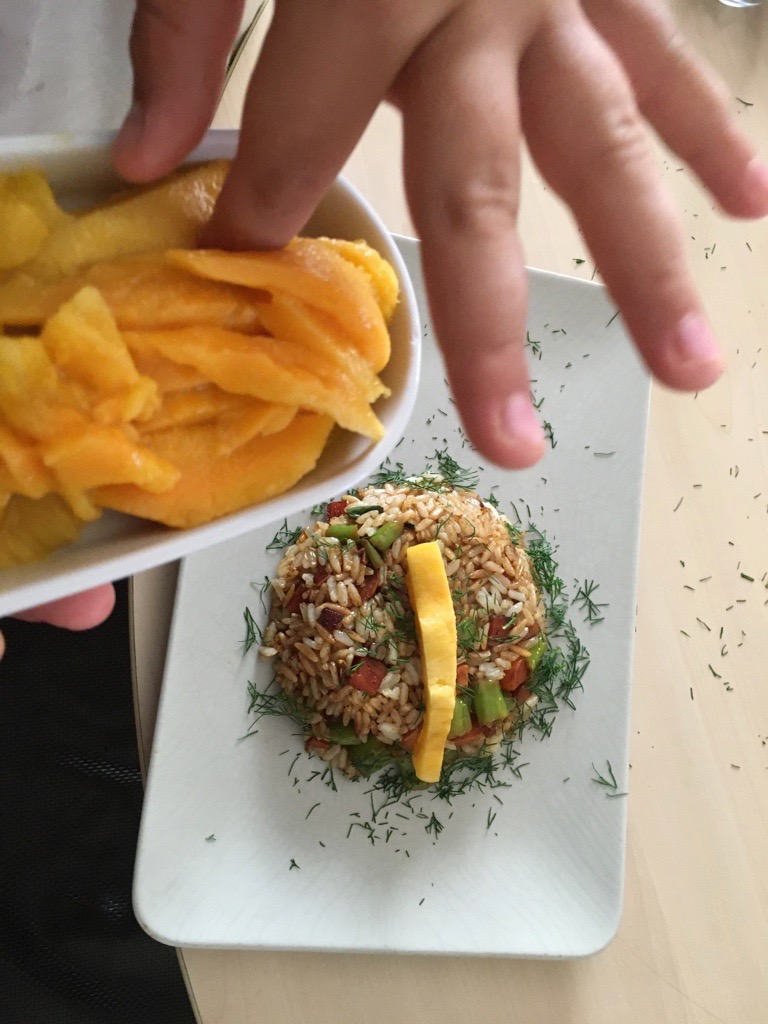
The Final Table is a favourite — professional chefs competing in pairs, each episode anchored in a different national cuisine, with enough context given that it functions as a genuine introduction to food culture around the world. Masterchef works well too, particularly with learners who want to actually cook; we’ve used it as the prompt for replicating dishes at home, which turns a passive watching session into an active practical one.
Extension work that comes naturally out of cooking shows: writing a restaurant review in the style of a newspaper critic; a descriptive writing exercise about a favourite meal or a terrible one; researching and writing a recipe from a country featured on the show; building and shopping for a meal from scratch.
History on screen
Television does something for history that textbooks struggle with — it makes the past feel populated. When our learners are deep in a particular period or topic, we look for a show set in that world. The Railway Children for early twentieth-century Britain. Little House on the Prairie alongside American frontier history. Horrible Histories for almost any period, with the bonus that it’s genuinely funny and that helps things stick.
A few shows that have worked particularly well for us:
Secrets of the Saqqara Tomb — documentary filmmaking that happens to cover ancient Egypt in more depth than most school units would. Our homeschoolers still talk about it.
Mystery of Matter: Search for the Elements — three parts, puts the periodic table into human context by following the scientists who discovered each element. The history of science and the science itself, together.
Horrible Histories — the spin-off film Bill is also worth knowing about for a Shakespeare unit.
Great Museums — explores art, civilisations and history via museums around the world. The accompanying website has enough lesson resources that you could build a significant chunk of a home-ed history curriculum from it alone.
The Who Was Show — short, accessible introductions to major historical figures. Good as a primer before going deeper.
Science and the wider world
Anything presented by Brian Cox, Michael Mosley, or Neil deGrasse Tyson tends to be reliable. Cosmos: A Spacetime Odyssey is the long-form version of this and covers more ground than it seems possible for one series to cover. Nova (PBS) and MythBusters both reward the learner who wants to know how things actually work rather than how they’re supposed to work.
Inside the Factory, How It’s Made, Brain Games — all useful for the learner who asks “but how does that actually happen?” with genuine frequency.
Quiz shows and everyday sharpness
University Challenge is worth watching even if the questions feel out of reach — perhaps especially then, because it models the habit of thinking aloud and tolerating not knowing. Countdown is good for anyone building mental arithmetic. Quiz shows in general give the implicit message that knowing things is interesting, which feeds back into the overall goal of education (at home or in school): learning to learn for learning’s sake.
On language learning through TV
A show watched with subtitles on — in English for a native English speaker, or in the target language for a language learner — is a low-effort, high-exposure tool that most families don’t use enough. For bilingual children in a non-native environment, television is one of the best sources of native accent and natural speech patterns available. The passive exposure is real, even when it doesn’t feel like learning and helps with vocabulary, pronunciation and confidence.
The principle underneath all of it
TV works as a teaching tool when it’s treated as a starting point rather than an endpoint. Watch it, then talk about it. Watch it, then make something. Watch it, then read the book it came from. A show that generates a question your learner wants to answer has done more educational work than a lesson they sat through without curiosity.
Too much of it is still too much of it. But the solution to that isn’t guilt — it’s curation.