What do children need to learn?
One of the first questions parents ask when they start thinking about home education is a practical one: what do my children actually need to learn? It sounds like it should have a straightforward answer. It doesn’t, and that’s not a problem — it’s actually the point.
UK law requires that children receive an “efficient full-time education suitable to age, ability, aptitude and special educational needs.” There are no prescribed subjects, no set hours and no test requirements. The Children’s Wellbeing and Schools Act, which received Royal Assent in April 2026, does not change that standard — the suitable education definition remains exactly as it was. What the new legislation introduces is a registration requirement and an annual report to the local authority; the question of what counts as suitable is still yours to answer. If you want to understand what the new legislation actually changes, the full breakdown is here.
That absence of a fixed list of what children need to learn is what makes home education genuinely flexible and a great learning option for many kids. It’s also what sends a lot of parents to Google at 11pm wondering if they’re doing it wrong, if this whole thing was a mistake.
So what does suitable actually mean?
For most children, a suitable education covers the basics — reading, writing, maths, science — and builds from there. What you add, and how deeply you go, depends on your child. In a school classroom, one teacher has thirty children and a year to hit a set of standardised targets. At home, you have one child and years that accumulate. That changes everything about what’s possible.
If you want a reference point for what year-group expectations look like in a school setting, the national curriculum gives you that. This guide breaks down the national curriculum into topics by key stage, if you’re looking for an easy-to-use reference. It’s a useful document to have, and a reasonable starting point — but it’s a description of what schools are required to teach, not a definition of what your child needs to learn.
The most important thing you can give a child isn’t specific subject knowledge. The most important thing your children need to learn is how to learn, the curiosity to want to keep learning, and the skills to know how to do it. A suitable education, for most children, is one that builds those things alongside the academic foundations. When you’re working one-to-one over years, you have time to find out what genuinely interests them, identify where they’re strong and where they need more support, and adjust as you go. That’s not a loophole in the definition of suitable — it’s what suitable is actually describing.
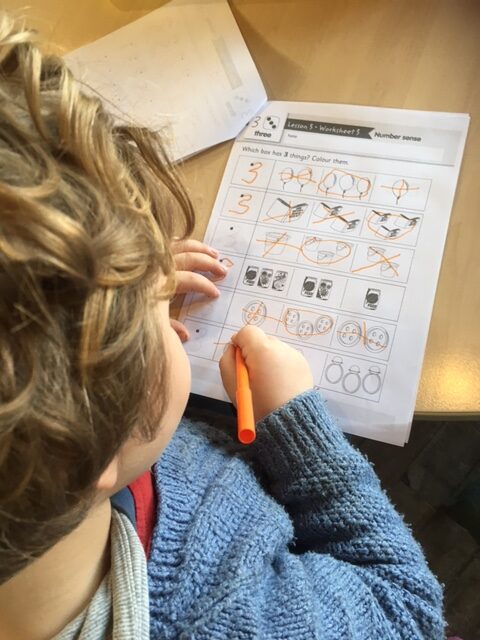
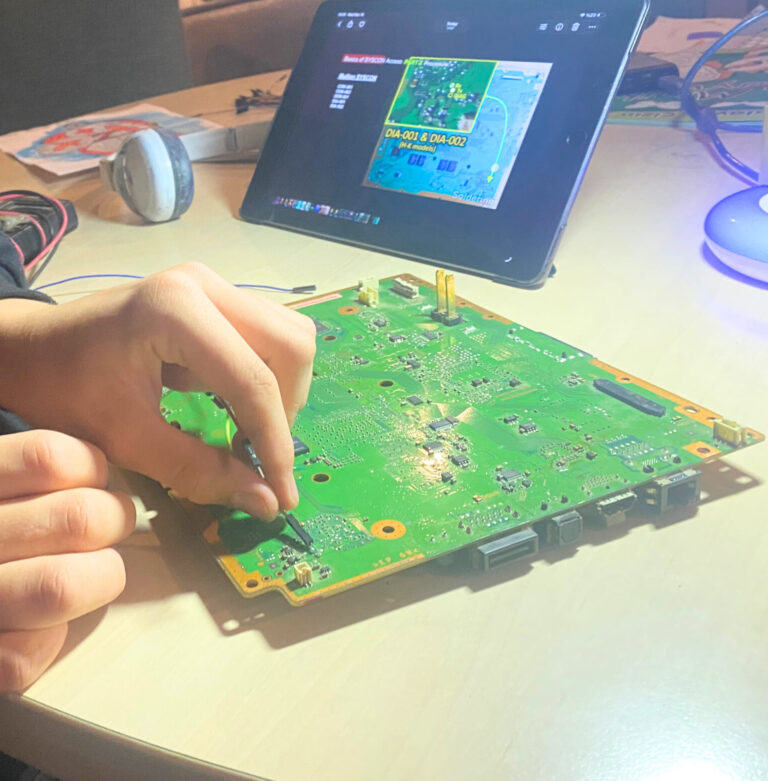
I’ve been home educating for ten years across three children, and each of their education paths looks different. We start each year with what I think of as a need/want list: subjects and topics I’ve decided they need to study, and the rest of the year filled with what they’re interested in. From the outside, a term spent studying video games doesn’t look like a structured education. From the inside, it covers engineering, physics, maths, computer science, the relationship between language and code, art, history and economics — and it’s entirely possible to build it around the grammar and language requirements that make up a solid English curriculum. Suitable rarely looks like school. That’s not a gap; it’s the whole advantage.
The question that actually matters
If you’re trying to assess whether what you’re doing counts, there’s one question worth coming back to: are they learning? Not learning everything, not learning it in the right order, not learning it the way school would teach it — just learning. If the answer is yes, you’re almost certainly doing it right.
That said, I know from experience that “almost certainly” doesn’t always feel reassuring at three in the afternoon when nothing has gone to plan. The doubt that creeps in on the hard days isn’t really about the curriculum — it’s about the particular pressure of being both the parent and the teacher at the same time, and the way those two roles can talk each other into a spiral when the day’s going badly. Parents’ evenings help: two hats (teacher + parent), one pair of eyes (yours, objectively), and the evidence of learning you know exists, you just might not have yet formulated.
Keeping a brief weekly log can help. Not necessarily a formal record, just a note at the end of the week of what the days have actually included. The rabbit holes, the books picked up, the conversations, not just what got written down. It’s a reliable reminder that yes, they are learning, and it’s useful groundwork for the annual report that is expected to be required following secondary legislation from the Children’s Wellbeing and School’s Act. I use it the same way I use a parents’ evening with myself — a structured moment to look at where things are, honestly, from both sides of the table.
What you’re actually preparing them for
It’s worth thinking about this, because it changes how you read the question of what a suitable education means.
The world our children are entering values judgement, adaptability and self-direction in ways that weren’t true a generation ago. The ability to think critically, learn independently, express themselves clearly and navigate new tools and environments is increasingly what opens doors — alongside, not instead of, formal qualifications. Home education gives you the space to think about both.
For a child heading toward university, the academic path is clear and entirely achievable from home. For a child whose strengths lie elsewhere, the flexibility is yours to use. A portfolio of demonstrable work — coding projects, independent research, creative output, self-directed learning across a range of subjects — is already something employers and institutions pay attention to, and that’s only going in one direction. This is worth thinking about when you’re planning the homeschool year: What do they need to learn, and equally, what would they like to learn?
Knowing what you’re preparing your children for doesn’t make the hard days easy. But it gives you something to come back to when the printer’s out, the toast has burnt and the calculator’s missing. That’s not a planning failure; that’s just where the home and education meet.