When You’re Both the Parent and the Teacher
Knowing that something is the right choice is not the same as saying it’s always easy, and on the days home-ed is anything but easy, there’s a particular spiral that home-educating parents know well. It’s complicated: you’re both parent and teacher, your child is also your pupil and sometimes all of those different roles collide.
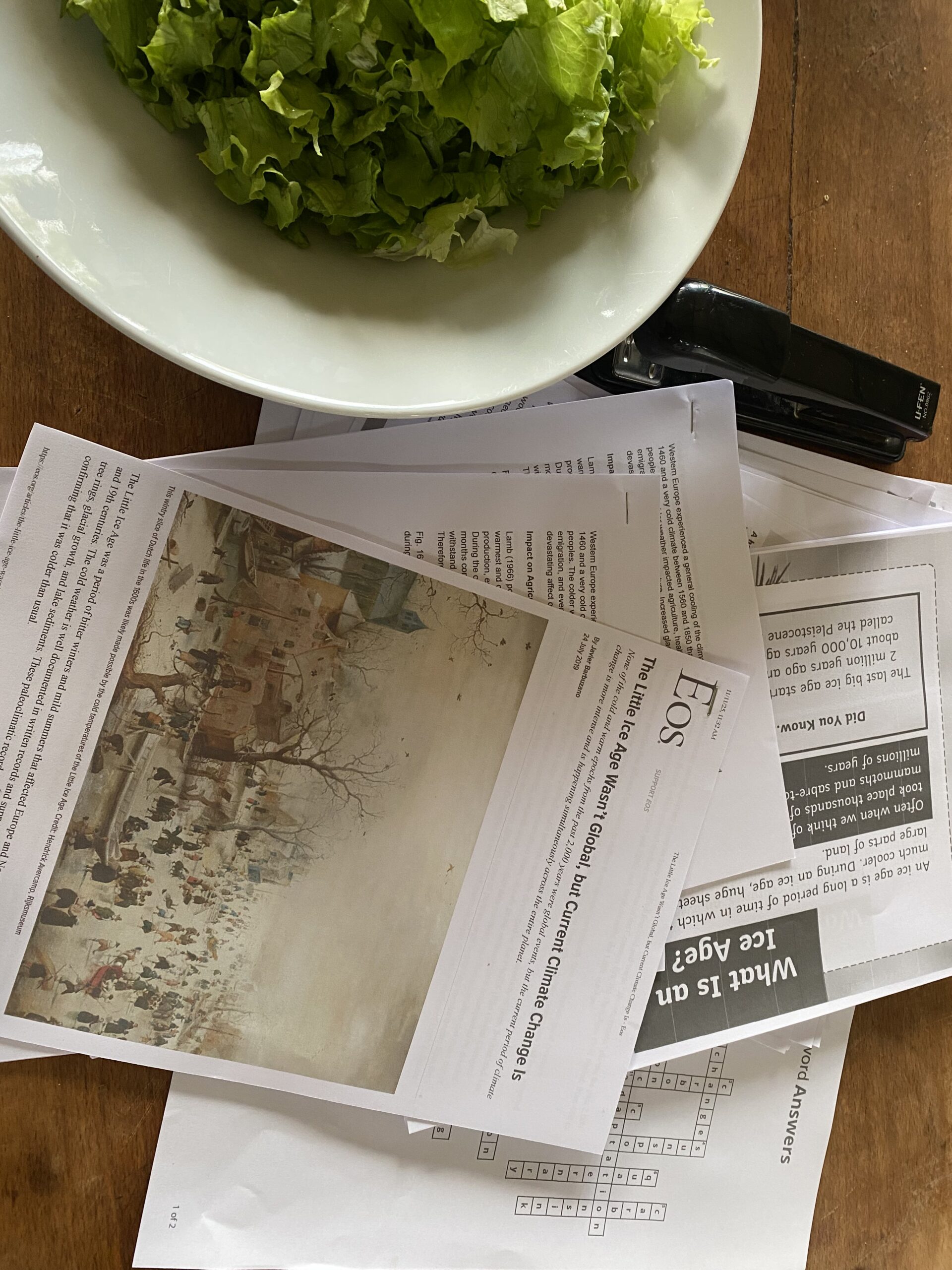
It usually starts mid-morning. The lesson isn’t working. Someone is in tears (sometimes you). The house is a disaster, and the same load of laundry is on its third cycle. The printer’s not printing, you’ve misplaced the textbook for the back-up lesson and the toddler has started to cough. Nothing is going to plan, and the gap between the home education you imagined and the home education you are currently living feels huge.
And then the thought arrives: am I actually doing this right? Should they be in school? Are they missing something? Am I the problem?
That’s the loop. And once you’re in it, it feeds itself — because the more you doubt yourself as a teacher, the more you second-guess yourself as a parent, and the more you second-guess yourself as a parent, the more you doubt yourself as a teacher. Round and round, usually on an empty coffee cup and insufficient sleep and unnecessary piles of paper.
I have been in that loop more times than I can count. In a moment I’m not proud of, I have used school as a threat to try to get a difficult afternoon back under control. It didn’t work, wasn’t fair, and it made everything worse. Not least because the implicit message was that school was a punishment, which is not a relationship with education I want to model for anyone: school has always been on the table if any of our children wanted it. But in that moment..well, we don’t always parent as our ideal self would like us to.
What I didn’t know then, and do know now, is that the loop isn’t telling you something is implicitly wrong with the choice of home education, or the education itself. It’s telling you that today is hard. Those are different things, and the loop makes them feel identical.
When life is the hard part, not the home education
There’s a version of the loop that isn’t really about home education at all. It’s about the season of life you’re doing it in. Life doesn’t stop because you choose home-ed but it can become more complicated. The built-in childcare of school is gone, the responsibility of their learning is yours not the headteacher’s and lunch is all on you.
When life is hard through circumstances, it’s ok if learning gets deprioritised. Not because you don’t care about your children’s education, but because what they need most right now is a parent who is managing and not bringing outside stress into school.
If as a parent life is hitting hard, if you’re grieving or struggling or juggling commitments that themselves are tough, it’s ok to ease off in your teacher role. That doesn’t make a hard season fine but it does makes it manageable, and temporary, and not the measure of your home education. It certainly doesn’t mean their learning is failing because a couple of weeks (or even months) go slow.
The loop in those seasons tends to be loudest precisely because you have the least capacity to argue back against it. If that’s where you are, the question isn’t whether today counted. It’s whether you can get to tomorrow and if they’ve learnt anything at all that day: they usually, probably have.
Why the loop exists
The parent-teacher role-swap is genuinely hard. You are one person doing two jobs that make contradictory demands. The teacher needs to hold the line on learning. The parent needs to respond to the child. When a lesson breaks down, the teacher instinct is to find a different approach and push through; the parent instinct is to read the room and cancel school. Both instincts are right, at the same time, with nobody else in the room to help you choose.
That’s not a failure of planning or curriculum or commitment. It’s the structural difficulty of the role-swap. It’s going to happen regardless of how good your home education is.
The loop also has a specific accelerant: you won’t know if you’ve done this well until your children age out of home education. The qualification comes after the job is finished. There’s no moment mid-process when you can point to something and say, I got it right. That’s the freedom and the doubt-feeder of educating your own children: no one but them will tell you if you are, or were, capable of doing so. There’s no guarantee. But then, there’s no guarantee your kids would be ‘successful’ at school either. The same thing goes!
So what helps?
Sometimes the right call is simply to call time on the day, or at least take a break for a bit. Sometimes you need more than that — a focused break to let everyone recalibrate and delve deeper into the structural niggles that might be causing the system to break. We call those weeks study breaks and they’re never a waste of time.
Home education isn’t an easy schooling option to choose, but if you’re here, doing it, you made that choice for a reason. Whether it was an actual choice you made or a choice made for you: you chose this. If you need to take a break and reassess that, do it. Deciding that home education no longer works — or can’t work this season — is not a failure. Neither is deciding that the way you’ve been doing it needs to change; you don’t need to teach every subject yourself to successfully home-educate and maybe an alternative structure is what your homeschool needs. A practical way to pre-empt the loop and figure out the root cause of underlying niggles is to schedule a home-ed parents evening, which sounds a little absurd but does something real to ground your thoughts.
But one of the simplest ways out of the loop is simply picking up your phone and scanning through the photographs. If your children are smiling, busy and creative, you’re getting the main things right. The loop was lying. It usually is.